Emerging biological approaches offer an opportunity to create more sustainable and resilient playing surfaces.
Read MoreThis was an unfilled system, born was the 1st generation of synthetic sports surfaces.
At the same time the first sand-filled systems were developed by Frederick T. Haas which utilised silica sand infill to hold the carpet fibres upright…enter 2nd generation sports turf.
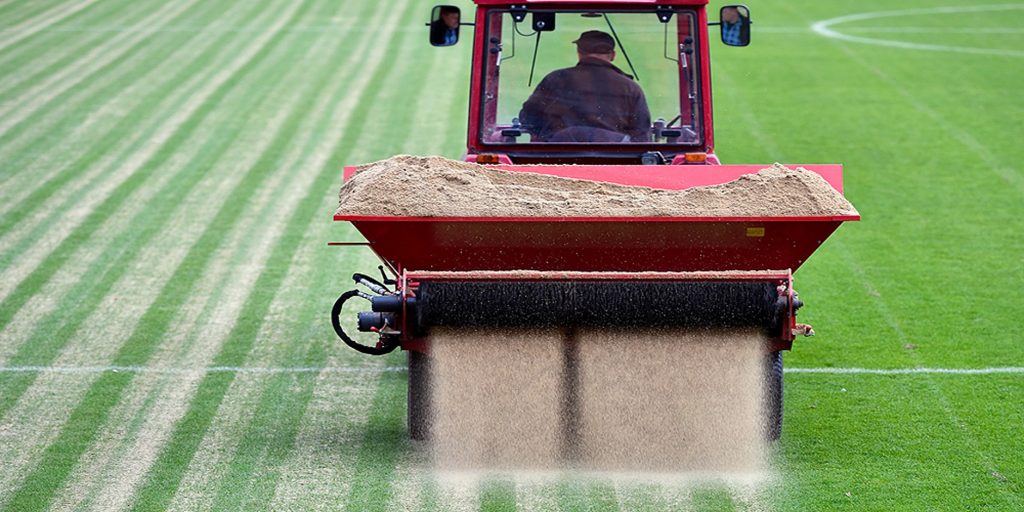
Fast forward to the 1980’s and 3G turf was developed with silica sand and recycled rubber tyres, the application was for larger balled sports such as football or even contract sports such as rugby and GAA.
In more recent years manufacturers have released products for football and contact sports called 4G, and even 5G, let’s put this matter to bed finally. 4G is either without infill, or just has a sand stabilisation layer, relying on the densely packed fibres to offer resilience in the absence of a performance infill such as rubber granules, 5G is…the same thing, just created in the ongoing war of upmanship between rival manufacturers.
Let’s get something clear, an unfilled surface is as described above a 1st generation synthetic turf system, one with sand only, 2nd generation. There is and never has been any innovation past the point of what we refer to as 3G, and that’s that, sorry to burst your bubble.

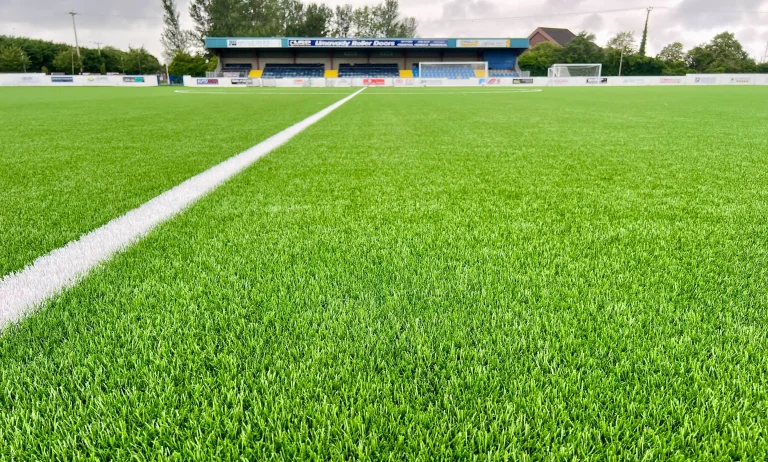
So, onto the options available for your football pitch requiring FIFA certification. Up until recently only true 3G surfaces were accepted, however in the race to solve the upcoming ban on microplastics, all leading manufacturers set about developing 4G and 5G surfaces, aka 1G and 2G. Due to issues with skin abrasion and friction however, FIFA were reluctant to accept them. Recently however, they have changed tack and will now accept them as long as they meet all performance criteria, which many now do.
So now you can invest in a system without the requirement for infill monitoring and topping up, but be mindful that without this feature in the system, pile can flatten prematurely turning your new football pitch into a decent hockey field before long!