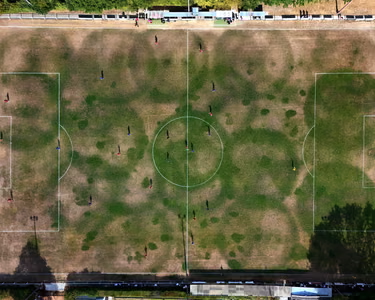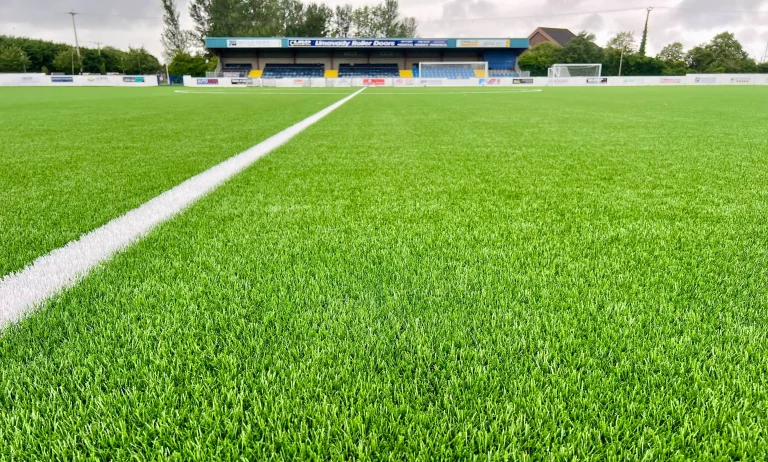
Emerging biological approaches offer an opportunity to create more sustainable and resilient playing surfaces.
Read MoreRecycling: A Solution That Has Fallen Short
I worked on the development of the TigerTurf Ecocept shock-pad, a concept intended to agglomerate old synthetic pitches into mixed-plastic pellets for use in a structural shock-pad, potentially eliminating the need for a conventional macadam base and separate shock-pad. An agglomeration machine was installed and production began. The concept was compelling: old pitches becoming new shock-pads.
The commercial reality, however, proved very different. Clean, consistent recycled plastics were easier to process than mixed, dirty and sandy synthetic turf. In my view, commercial incentives ultimately took precedence over the environmental ambition, leaving the industry with a solution that failed to deliver on its original promise.
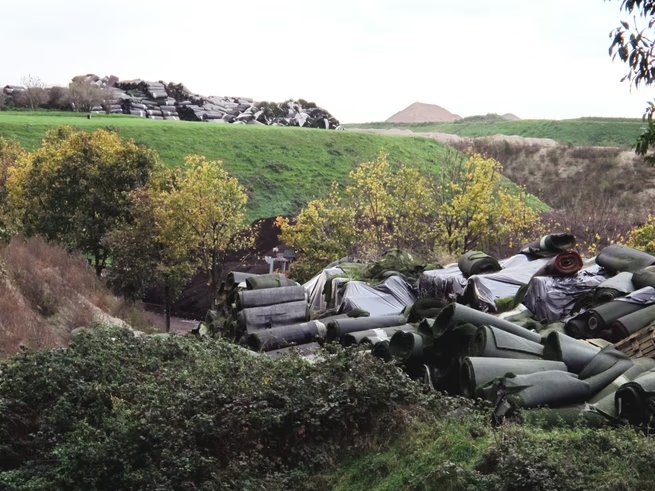
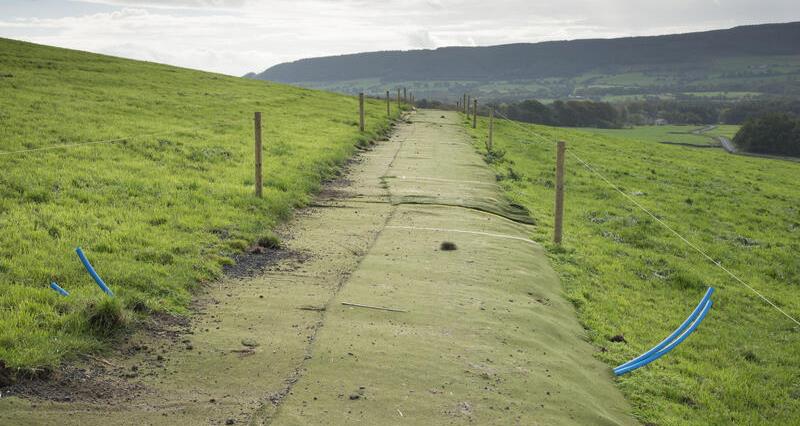
Other attempts at repurposing have included cattle tracks, flood-defence applications, golf-course winter tracks, caravan pitches, fishing pegs and shooting galleries. Some offer legitimate opportunities to extend a product’s useful life, but what happens when those applications reach their end of life?
We risk simply moving the problem down the road. Anything buried will stay buried, farmers will simply resurface and resurface as each layer gets buried with earth. I am reminded of a farmer I once knew, Pete Marler, who rarely bought new clothes. Instead, he wore additional jumpers over those with holes, until three or four were doing the job of one decent one!
Regulation Without Capacity
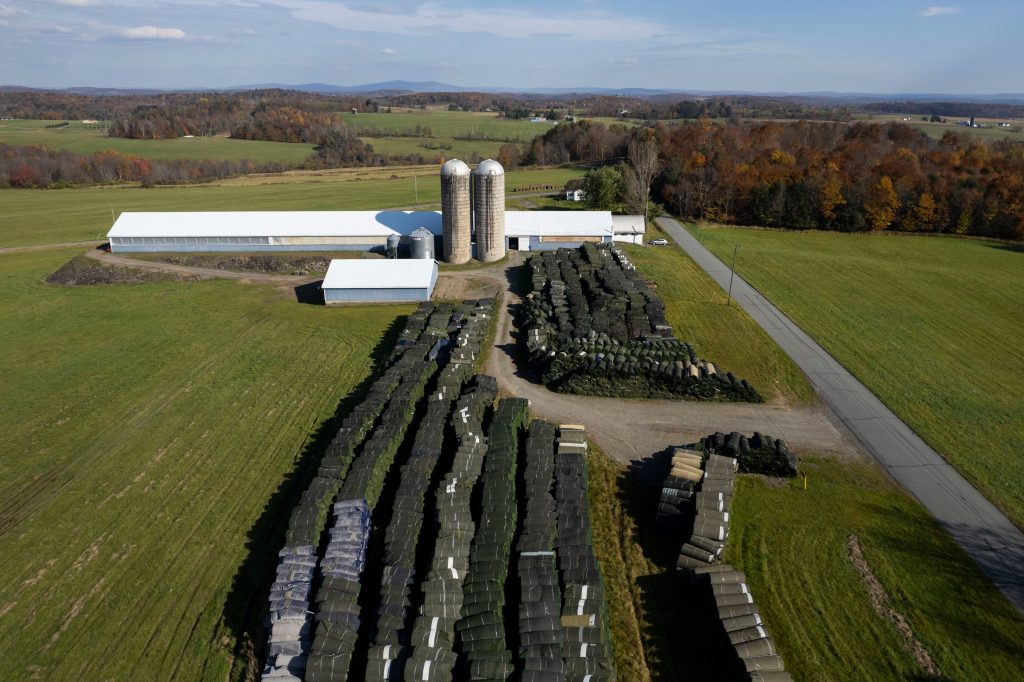
The Environment Agency’s regulatory framework has introduced tighter controls around waste handling and processing. While environmental protection is essential, the costs of compliant operations and restrictions on processing capacity have contributed to a bottleneck. Recycling businesses struggle to manage the demand, leaving projects unable to secure a viable route for their old turf.
We are currently managing a Sport NI-funded project in Northern Ireland to resurface a full-sized GAA field. We were instructed to ensure the existing turf was recycled. With no suitable recycling facilities available locally, contractors approached licensed businesses in England, only to be told that none could accommodate the material.
The requirement had originated with Sport NI, following advice from Sports Labs, and reflected the wider approach promoted by organisations such as the Football Foundation, Sport England and SAPCA. Yet the practical route to compliance simply wasn’t available.
This raises an obvious question: who is responsible for ensuring that recycling capacity actually exists before recycling is made a mandatory requirement?
We had to backtrack, and Sport NI accepted the circumstances, allowing us to proceed under the applicable Northern Ireland framework. I personally contacted the Northern Ireland Environment Agency repeatedly to establish the relevant legislation but received no definitive answer. There is currently no legislation in Northern Ireland for us to fall back on, presumably because of a lack of suitable facilities, the proverbial ‘chicken and egg’ situation. The experience highlighted a worrying lack of clarity for those trying to manage end-of-life turf responsibly.
The absence of a clear, specific requirement does not mean every alternative is automatically lawful or environmentally acceptable. Nevertheless, we need a regulatory framework that is clear, proportionate and workable.
Europe Is Struggling Too
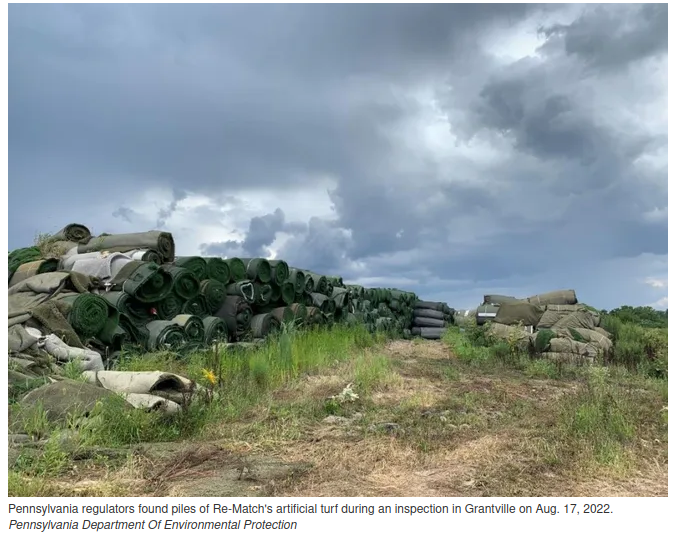
Europe has not escaped these challenges. Re-Match established facilities in Denmark and the Netherlands, focusing on separating synthetic turf into recoverable raw materials rather than agglomerating mixed plastics. However, the economics of this approach have proved difficult, with feedstock availability, operational costs and land
a lack of market incentives from municipalities prioritising circularity; all affecting viability.
GBN subsequently developed a substantial facility near Amsterdam, focusing on agglomeration, a comparatively straightforward method of processing mixed plastics into materials for other applications. Questions have arisen around early commercial arrangements and subsequent ownership changes. These matters warrant scrutiny, but the underlying issue remains the same: recycling infrastructure must be commercially sustainable and capable of handling the volumes being generated. Currently GBN, now AGR, cannot accommodate anywhere near the demand of the industry.
Why Are We Overlooking Reuse?
I believe the industry should never have moved so readily past reuse in favour of recycling as the default solution.
SAPCA’s use of the term ‘preparing for reuse’ in their recycling pyramid, replacing the traditional ‘reuse’, reflects recognised waste-management approaches as legislated by the EA, in that they do not wish to promote repurposing, or reuse of synthetic turf. The wider industry however needs to give greater consideration to what reuse can achieve in practice. Reuse is not always suitable, and old turf must be assessed for condition, contamination and its intended application. However, a surface no longer fit for a high-performance sports pitch may still serve a useful purpose elsewhere.
Recycling requires transport, processing, energy and infrastructure. Depending on the method, it may also result in a lower-value material with fewer potential applications. Reuse, where technically and environmentally appropriate, can avoid some of these processes altogether.
The difficulty is that reuse requires assessment, traceability, quality controls and a clear regulatory framework. It is administratively easier to specify recycling than to evaluate individual reuse applications. But convenience should not be confused with sustainability.
We need agreed criteria for assessing suitable applications, establishing material quality and ensuring environmental protection. Funders, governing bodies, consultants, manufacturers and contractors must also confirm that a viable end-of-life route exists before imposing requirements that cannot be delivered.
Stop Moving the Problem Down the Road
The synthetic sports surface industry has made considerable progress in developing playing surfaces, but it has been far less successful in managing their end of life.
We cannot continue installing millions of square metres of synthetic turf without taking responsibility for what happens afterwards. Nor can we assume that recycling will automatically provide a practical solution to the volumes involved.
Reuse should be the first option considered, recycling the next, and disposal the last resort. Disposal can be turned into a benefit if the end-of-life turf can be safely incinerated to provide power for the National Grid.
We need to retain the value of materials for as long as possible, supported by appropriate technical assessment, environmental safeguards and workable regulation. Recycling remains essential, but it should not become the default simply because it is easier to administer.
We have spent decades developing the synthetic sports surface industry. It is time we devoted the same ingenuity to managing its legacy.