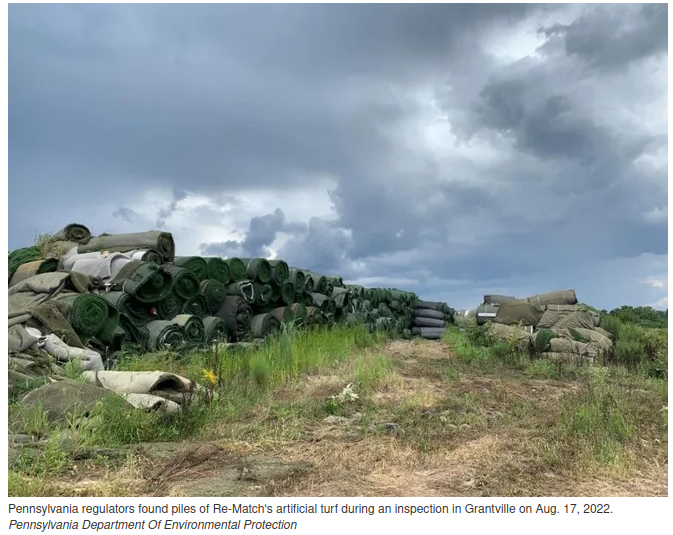
What is the reality of recycling of synthetic pitches? EcoSport spill the beans on the...
Read MoreIf these infill mediums disappear into the history books, what then replaces them? The case for synthetic sports surfaces stands strong as the population increases and demand for land resources outstrips availability. Natural turf manages around five to ten hours of play a week; ‘hybrid’ systems increase this to perhaps 15 hours a week with good maintenance. Water shortage for irrigation can be an issue, along with high maintenance costs.
The race to develop ‘4G’, or unfilled systems, is one the industry has been waging in recent years. Although FIFA’s acceptance within the market is positive, limitations associated with skin-friction and abrasion safety, fibre resilience, slide resistance, and dimensional stability continue to constrain broader success. Then there is consideration for the high HIC values required for contact sports, not an easy objective to achieve without the soft landing provided by a performance infill….
We began looking at ‘alternative infills’ in various guises some time ago to find many degraded too quickly, some do not offer enough shock absorbency, and compaction beyond retrieve can result in a rock-hard playing surface. The requirement is a product with an inherent elasticity, coupled with an ability to resist microbial and fungal attack, and sufficient wear resistance to last the lifetime of the surface itself and beyond. Coupled with these elements, the medium needs to be safe for the environment and all living things, sustainable and cost effective.
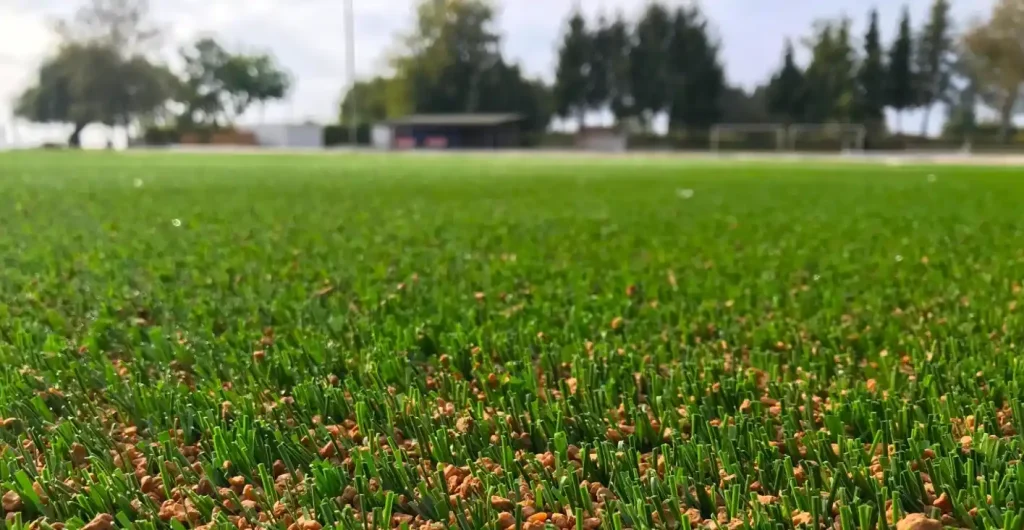
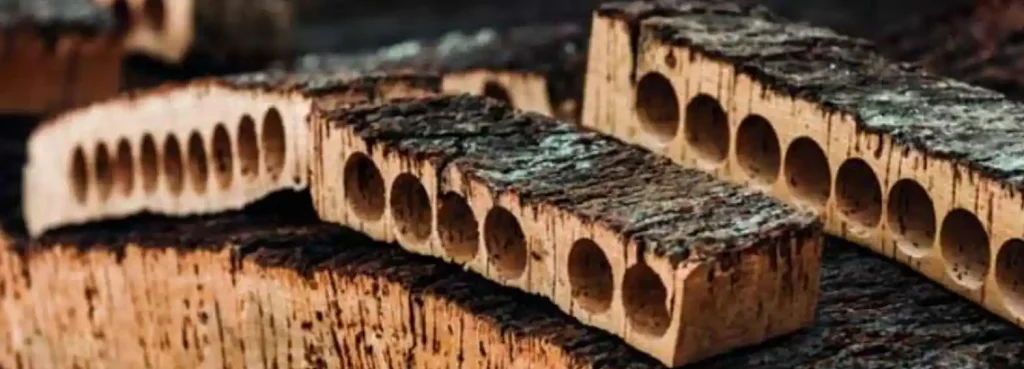
Early innovators recognised a market for such a product and started installing cork granule infilled pitches over fifteen years ago. There are now hundreds of cork infilled pitches installed across Europe and the rest of the world installed in every kind of climate. The reason for this success is the focus on harvesting high-quality cork from the all-important phellem layer from the bark of the cork oak.
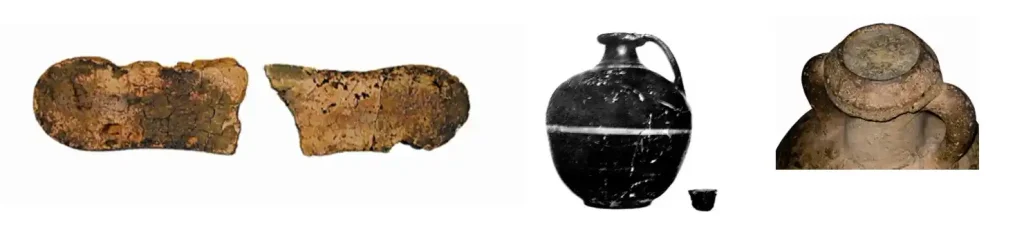
This is the layer that protects the tree from microbial and fungal attack, as well as providing a barrier to forest fires. Once harvested it is cured then separated from the darker denser outer layer, boiled, dried, and shredded to the required particle size. In this state it cannot absorb water – the essential reason it has been used in wine corkage for time immemorial; artefacts have been found going back some seven thousand years made of quality cork. If it cannot absorb water nothing can live on it or in it, as water is the source of life.
Compare these factors to other organic infill mediums consisting almost exclusively of the outer protective layer of seed husks. For a hard-shelled seed to germinate, such as olives, walnuts or coconuts that are widely used in 3G surfaces, the husk must break open. Commercial nurseries shave or file the husk to allow the embryo to fulfil its purpose – in nature this service is provided by the mycelium of a fungus, plants have evolved to make use of this process. Bearing this in mind, why would we consider using a medium designed by nature to decay in our football or rugby pitch? Surely better to utilise something designed to do the opposite…

Equally important to resistance of microbial attack is durability. This all-important phellum layer has great wear resistance, comparable even with ‘traditional’ infill systems such as SBR, EPDM and TPE. It will compress to around half its size only to expand and fully recover volume, owing to the fact it is made from millions of airtight cells containing a gaseous mixture.
So, how do you recognise a quality cork from some of the less useful products on the market? Simple, by density and granule size. A good quality cork will sit somewhere between 90-120kg/m³, and have a granular size between 1-2mm, i.e. no dust. The method of grinding and boiling the cork is also important, products exist in the market with incorrect production methods causing the growth of organic bacteria such as worms.
With regards to the UK and Irish weather, in our experience there is no need for concern.
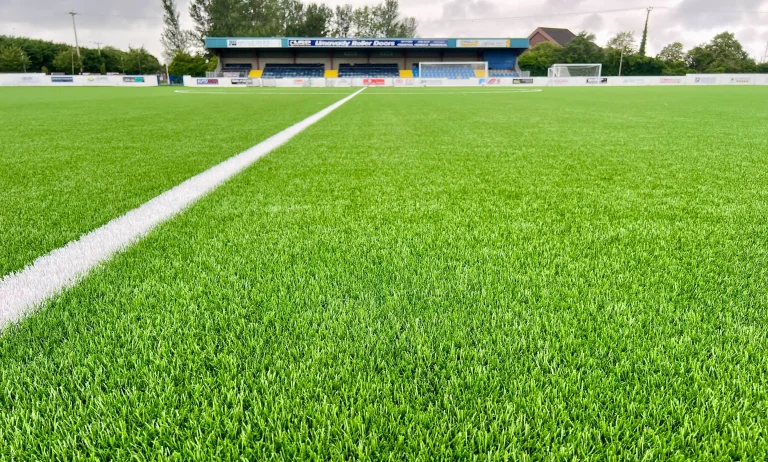
Cork floats, however with carefully designed and constructed pitch bases, this does not represent an issue at all. Important projects we’ve been involved with include England’s first cork infilled stadium pitch Newmarket Town FC in 2016, Monifeith FC installing Scotland’s first cork pitch and Hertford Town FC’s ground in an existing flood plain. It is important to consider 3G systems are designed to drain at a rate of ≥180mm/h which is a phenomenal amount, therefore if the base drains anywhere near as well, all of the water will pour through the system and the cork stay where it is.
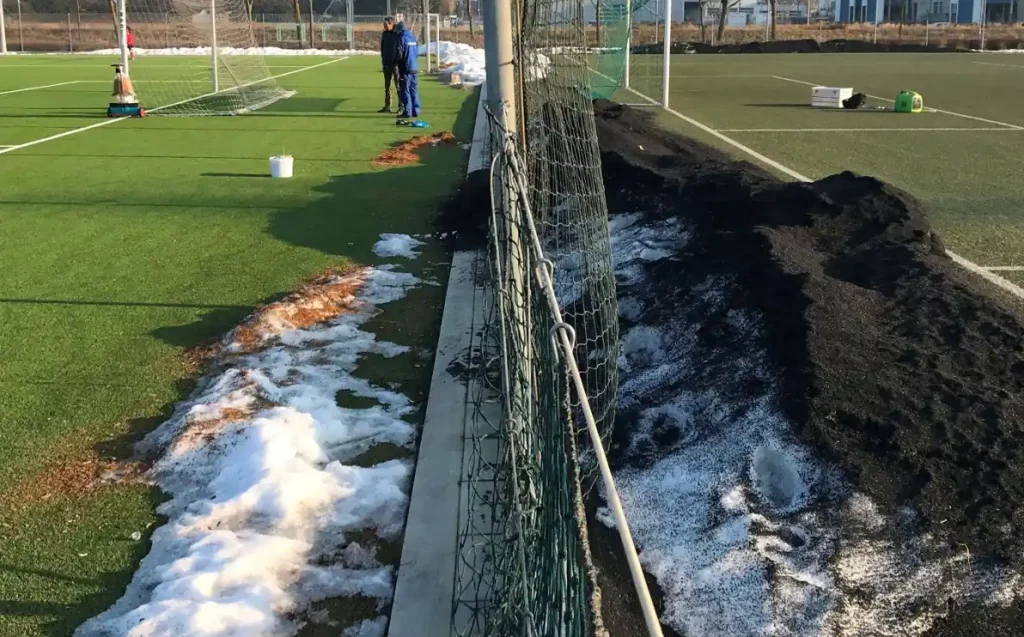
As cork cannot absorb moisture it cannot freeze, and if all of the water is travelling through the system, it means the whole system will maintain performance no matter the weather…
Another big question we get asked is with regards to availability – to what extent is the resource available? When we started working with this product it was ‘the perfect storm’. New World wines began the change to rubber stoppers for their bottlage and the movement resulted in less and less demand for traditional cork. The demand for the wine industry is decreasing, meaning potential to supply our industry increases steadily. As demand increases, supply could adjust accordingly, and pushing resources from other cork applications will also make a substantial contribution. We are currently nowhere near meeting the availability of this resource, as market prices are reflecting, rather than rising it is slowly reducing as suppliers jostle for position in this growing market.
If you have any other questions to ask including chemical leaching, performance characteristics, odour, heat. Whatever it is, EcoSport Innovations have detailed understanding of a host of Research & Development on the matter to answer all your questions conclusively. We can suggest systems which are fully accredited to FIFA, World Rugby, RFL and GAA standards, meeting both the stringent performance and durability requirements.